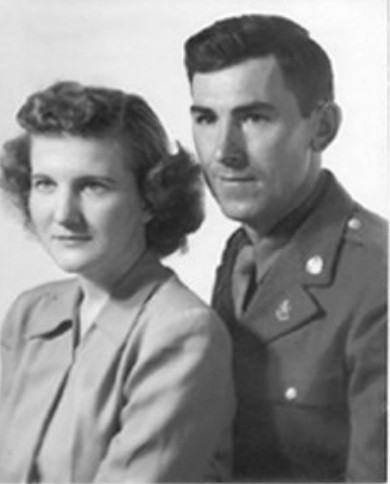
Albert’s wartime chapter connects the family history with work I recognize: equipment, surveying, construction and the coordination behind a job. The setting was very different from my own work. Reading the record gives me a way to understand the practical responsibilities alongside the larger events.
Engineering before induction
The biography describes Albert working on the Buckeye Ordnance Plant in South Point, Ohio, before entering the Army. It records applications, deferment and induction paperwork, followed by training with aviation engineers. These documents place his civilian engineering experience beside the duties he later carried overseas. [1]
New Guinea: turning a site into an airbase
The chapter records a May 1944 arrival in New Guinea and a construction assignment. It reproduces a November 14 commendation describing hangars, warehouses, camp areas and the construction and maintenance of roads. The work supported the conversion of the site into an operating airbase. [1]
That description puts the supporting work in view. An airfield depended on buildings, access, drainage and maintenance as well as a place for aircraft to land. The family account follows Albert through that work rather than treating his service as a list of locations.
The Philippines: surveying, construction and injury
For the Leyte period, the book reproduces a field-commission recommendation describing Albert’s surveying, layout, roads, buildings and hangars. It also says the proposed commission was not awarded; the author does not establish why. [1]
The biography records a shrapnel injury during a bombing attack at Tacloban on January 17, 1945 and says Albert received the Purple Heart. This is Albert’s account. Walter Gates’s separate Purple Heart recognition effort belongs to a different service record and must be researched separately. [1]
Moret airfield
The chapter then describes service with the 873rd Engineer Aviation Battalion and reproduces a unit commendation for building Moret airfield. The commendation describes construction around the clock under dangerous conditions and says the field was ready for aircraft on J plus five. That is the wording and sequence preserved in the family book; it still deserves comparison with the original unit records. [1]
Reading the family record
The chapter combines narrative, recollection and reproduced documents. I want to preserve that distinction. A dated recommendation tells us what an officer wrote at the time. A later recollection tells us what the experience meant to the person who lived it. Both help me understand the family, and each needs its source.
Eleanor’s wartime life is part of the same family history. Her work at Erie Proving Grounds and the household in Port Clinton have their own place in Albert and Eleanor’s wider story.
Source
[1] A. John Schweickart, Albert and Eleanor Schweickart — The Story of Their Lives, “Albert — War Years,” printed pp. 93–98; original chapter extract, PDF pp. 1–6. The chapter’s reproduced documents and later narrative are distinguished above. Full source in the family source register.